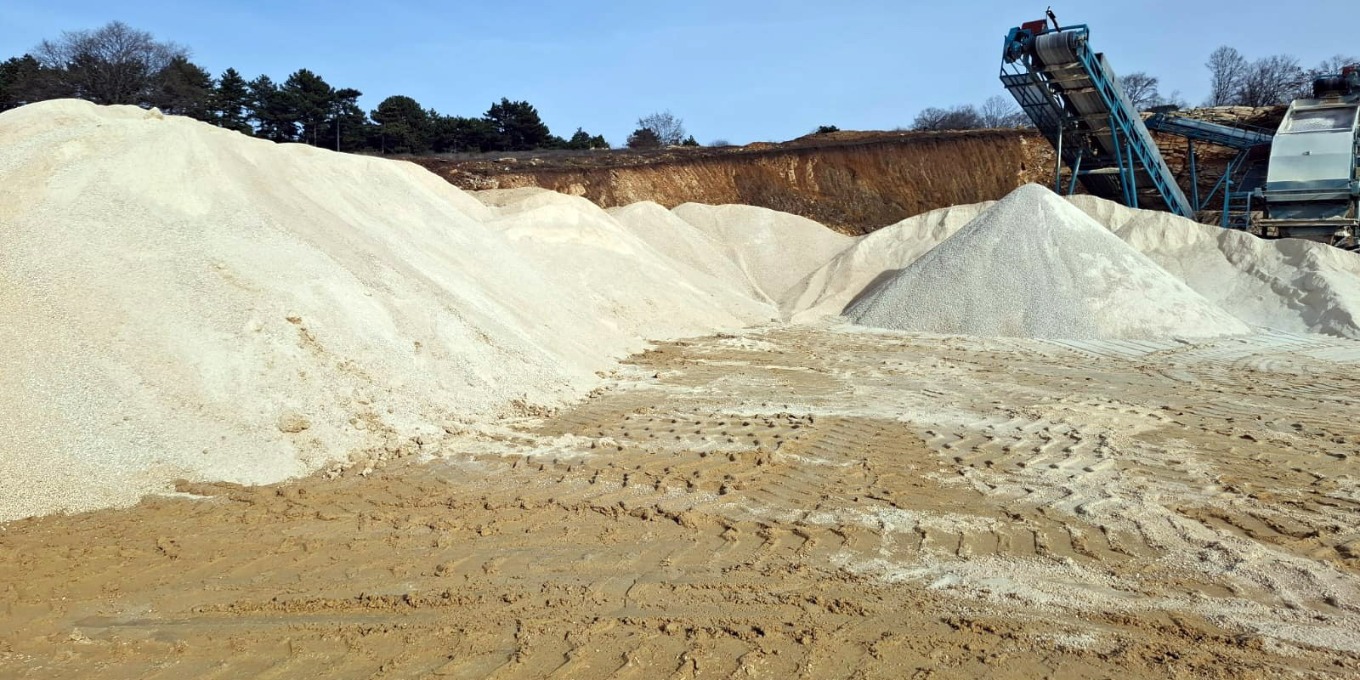
Alkaline mineral raw material for ceramic and glass processes
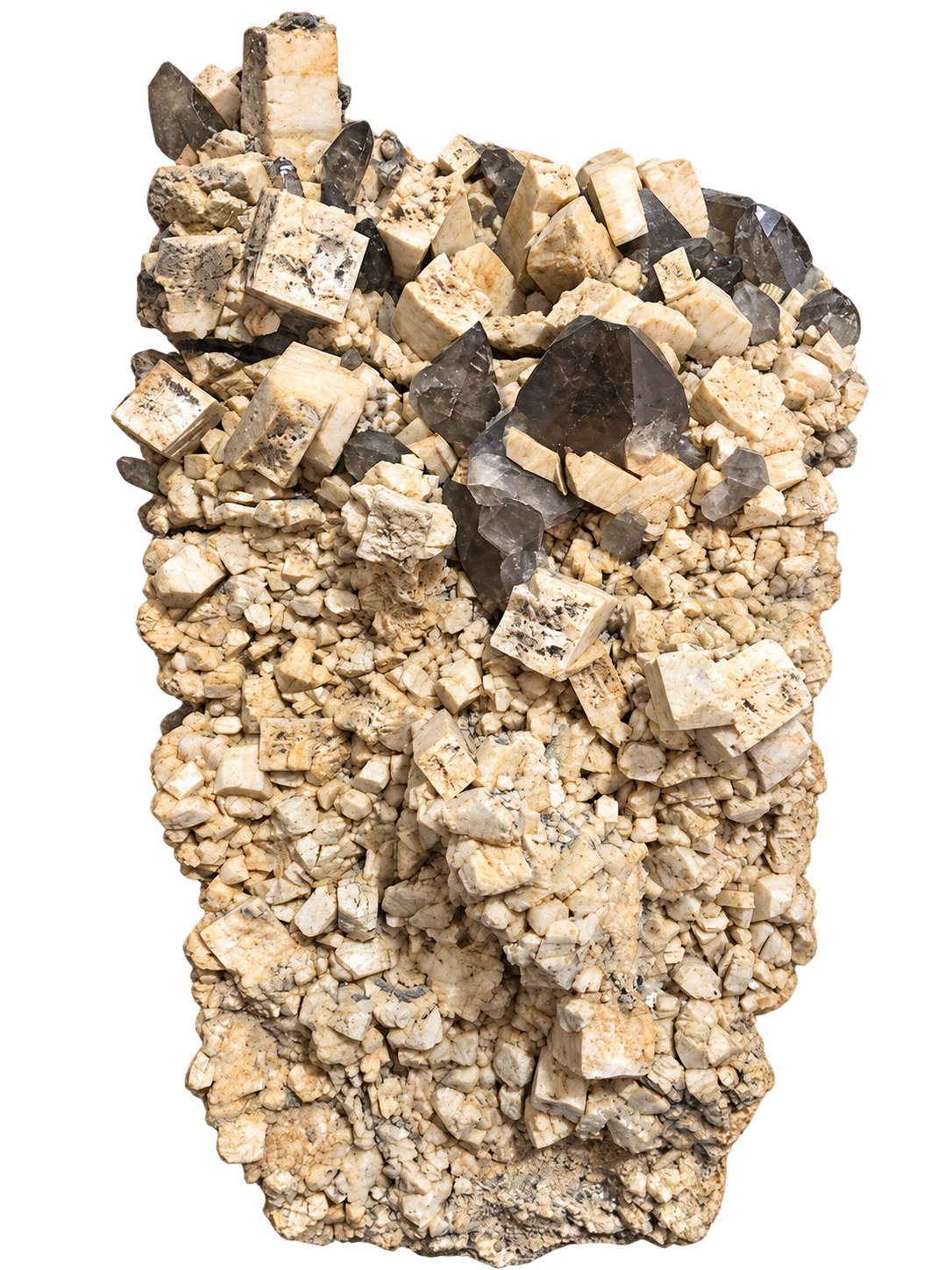
Feldspar is a natural aluminosilicate mineral group widely used in ceramic and glass production. Its alkali content affects the melting behavior and glassy phase formation during firing. Therefore, product selection should be made considering chemical analysis together with firing behavior, iron content, whiteness, and particle size.
Key Features
- Fluxing function depending on alkali content
- Suitability for ceramic body and glaze systems
- Controlled particle size options
- Quality classification based on chemical composition
Application Areas
- Ceramic tile
- Sanitaryware
- Tableware
- Glass production
- Mineral mixtures
Parameters to Consider in Product Selection
- Na2O / K2O balance
- Fe2O3 and coloring impurities
- Particle size
- Whiteness
- Firing color and melting behavior
Natural feldspar and feldspathic raw material options for ceramic bodies and technical mineral formulations
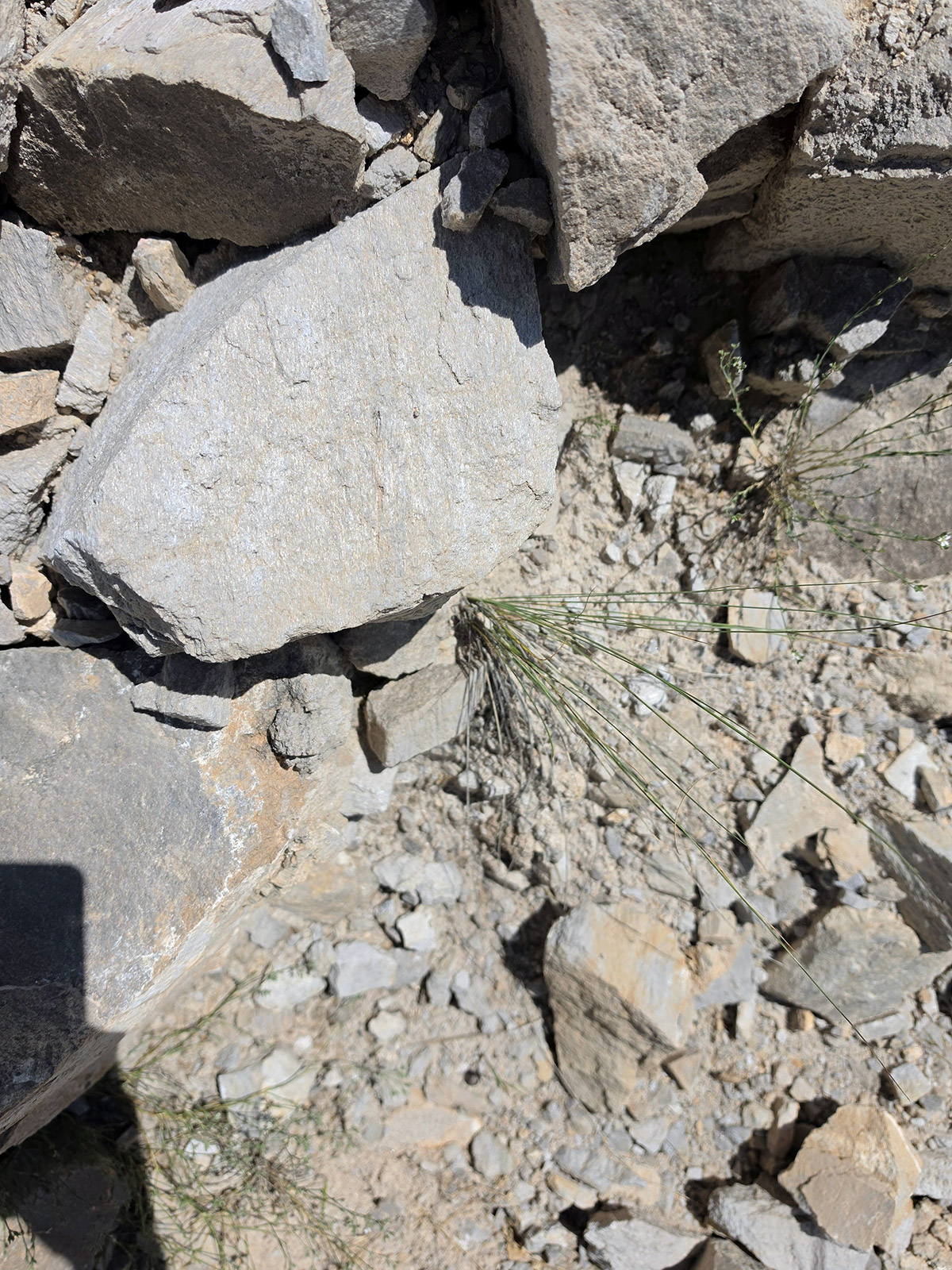
TS Minerals' feldspar portfolio consists of two different product groups: sodium-dominant natural Na-K feldspars (Na-K Series) and natural, non-floated feldspathic mixture raw materials (YF-M Series). Since both series have different chemical and mineralogical structures, they should not be evaluated within the same product group. Usage performance varies depending on the recipe, grinding fineness, rheology, and firing conditions.
Na-K Series - Sodium-Dominant Na-K Feldspar
The Na-K Series consists of two natural Na-K feldspar grades selected for use as a feldspathic flux in the ceramic industry. Both grades have a sodium-dominant alkali profile.
Na-K1 is considered the primary grade for ceramic recipes with color sensitivity due to its low Fe2O3 content. Na-K2 offers a more economical alternative with a similar total alkali content, but in applications where a higher iron level is acceptable.
| Type | Na2O + K2O | Na2O/K2O ratio | Fe2O3 | Application profile |
|---|---|---|---|---|
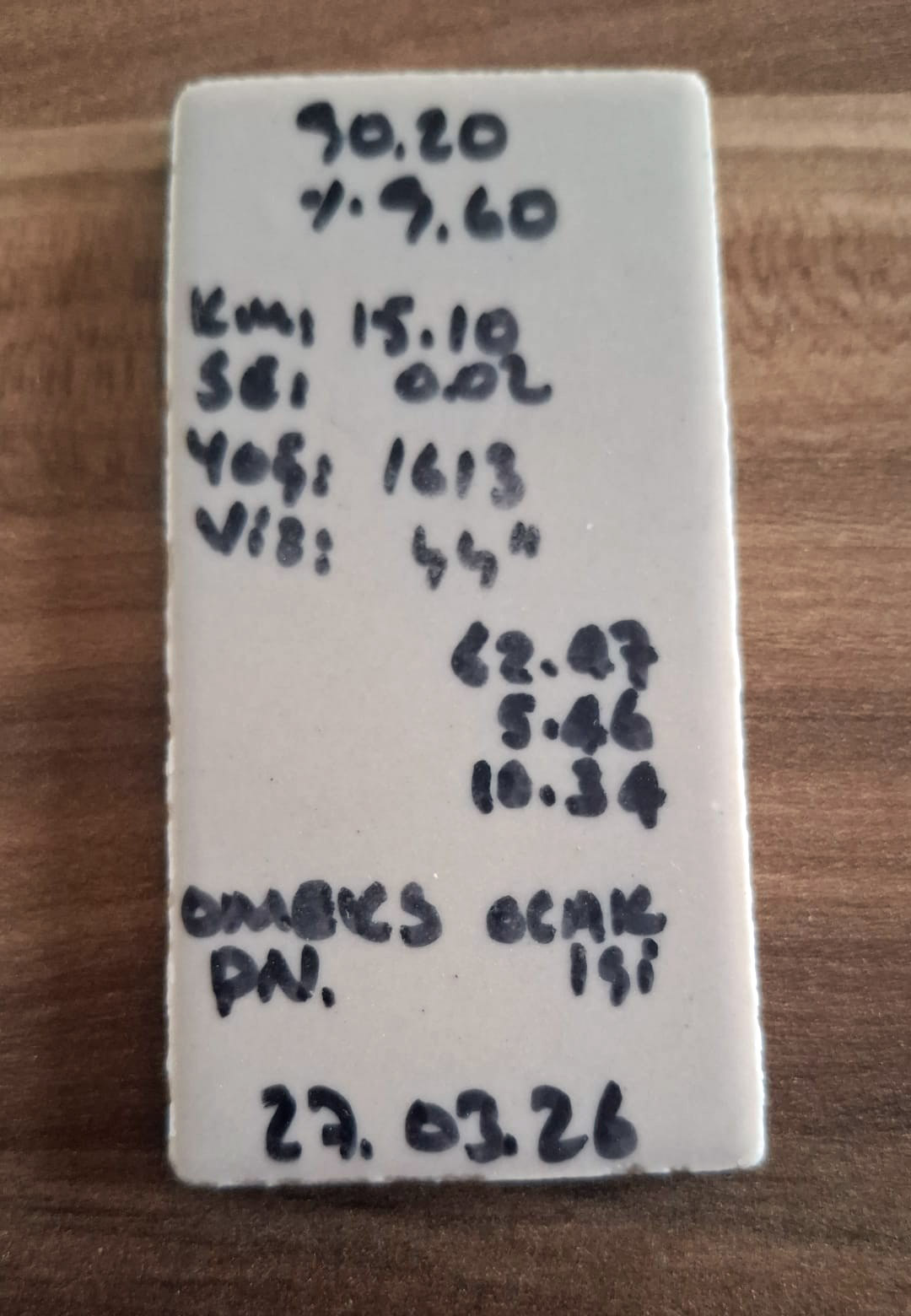
| Na-K1 | 11.01% | ≈ 2.35 | 0.22% | Low Fe2O3; primary grade for initial evaluation |
| Na-K2 | 10.91% | ≈ 2.12 | 0.50% | More economical; higher Fe2O3 tolerant recipes |
Main Areas of Use
- Wall and floor tile bodies
- General ceramic bodies
- Recipes requiring a sodium-dominant flux
- Trials for partial or full replacement of existing feldspar
- Frit and glaze formulations depending on the application
Supply Information
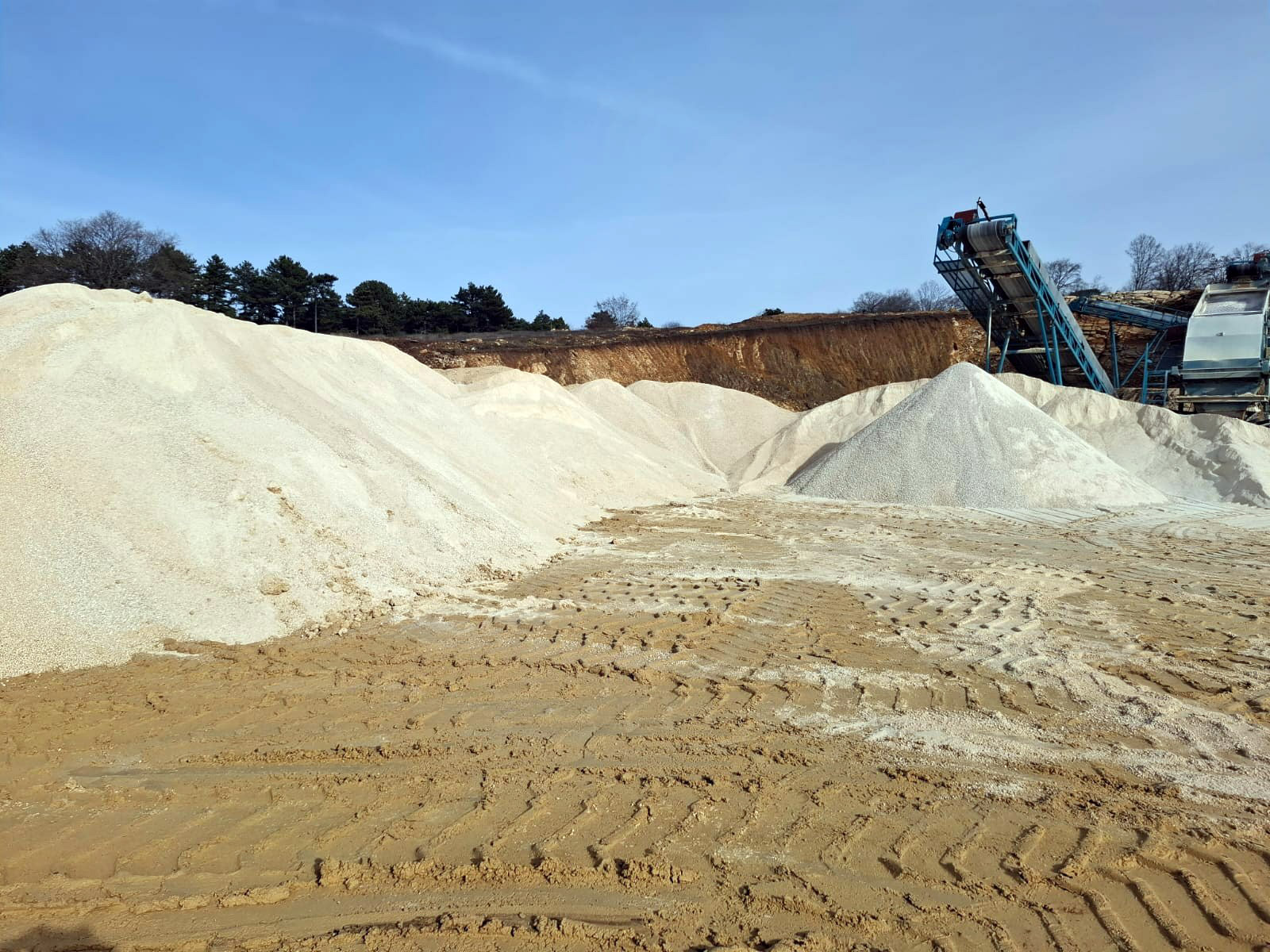
- Particle sizes: 0-2 cm / 2-5 cm / 5-15 cm
- Different particle sizes can be evaluated upon request
- Delivery form: bulk, Big Bag, or ground product
- Final product and packaging form are confirmed according to order conditions
It is recommended to verify firing color, water absorption, shrinkage, strength, deformation, rheology, and thermal behavior in the customer's recipe.
YF-M Series - Natural Feldspathic Mixture Raw Materials
The YF-M Series consists of three natural, non-floated feldspathic raw materials: YF-M1, YF-M2, and YF-M3.
This series should not be evaluated as classic premium white sodium feldspar, but rather as multi-component ceramic raw materials where quartz and natural clay components provide functional contributions alongside feldspathic minerals.
| Type | SiO2 % | Al2O3 % | Fe2O3 % | Na2O + K2O % | Prominent feature | Points to consider |
|---|---|---|---|---|---|---|
| YF-M1 | 76.12 | 13.84 | 0.30 | 7.83 | Balanced general profile; good slip behavior | Moderate firing gloss level |
| YF-M2 | 76.38 | 13.26 | 0.71 | 7.02 | Strong sintering behavior | Color critical; low L* |
| YF-M3 | 76.85 | 12.93 | 0.58 | 7.14 | Strength potential in selected recipes | More difficult slip and rheology behavior |
Product Positioning
YF-M1
The most balanced feldspathic mixture candidate for initial evaluation in general ceramic bodies.
YF-M2
Can be evaluated where sintering contribution is prominent, color sensitivity is lower, or in low-dosage formulations.
YF-M3
Suitable for selected recipes where strength contribution can balance more difficult rheological behavior in terms of process.
Supply Information
- Standard particle size: 0-10 mm
- Particle size is confirmed based on source and batch
- Delivery form: bulk or Big Bag
- Ground product and special fractions can be evaluated on an order basis
TECHNICAL EVALUATION
The selection of feldspar and feldspathic mixture raw materials should not be made based solely on chemical analysis values. Mineralogical structure, grinding fineness, solid content ratio, additive system, rheology, firing curve, color, water absorption, shrinkage, strength, and deformation together influence industrial performance.
Therefore, it is recommended to evaluate a new feldspar or feldspathic raw material through controlled substitution tests in the customer's existing recipe against the current reference raw material.
Note: The technical values provided herein are for general informational purposes and are non-binding. Final product performance and suitability must be verified in the customer's own laboratory and production conditions.